Last updated November 23, 2026
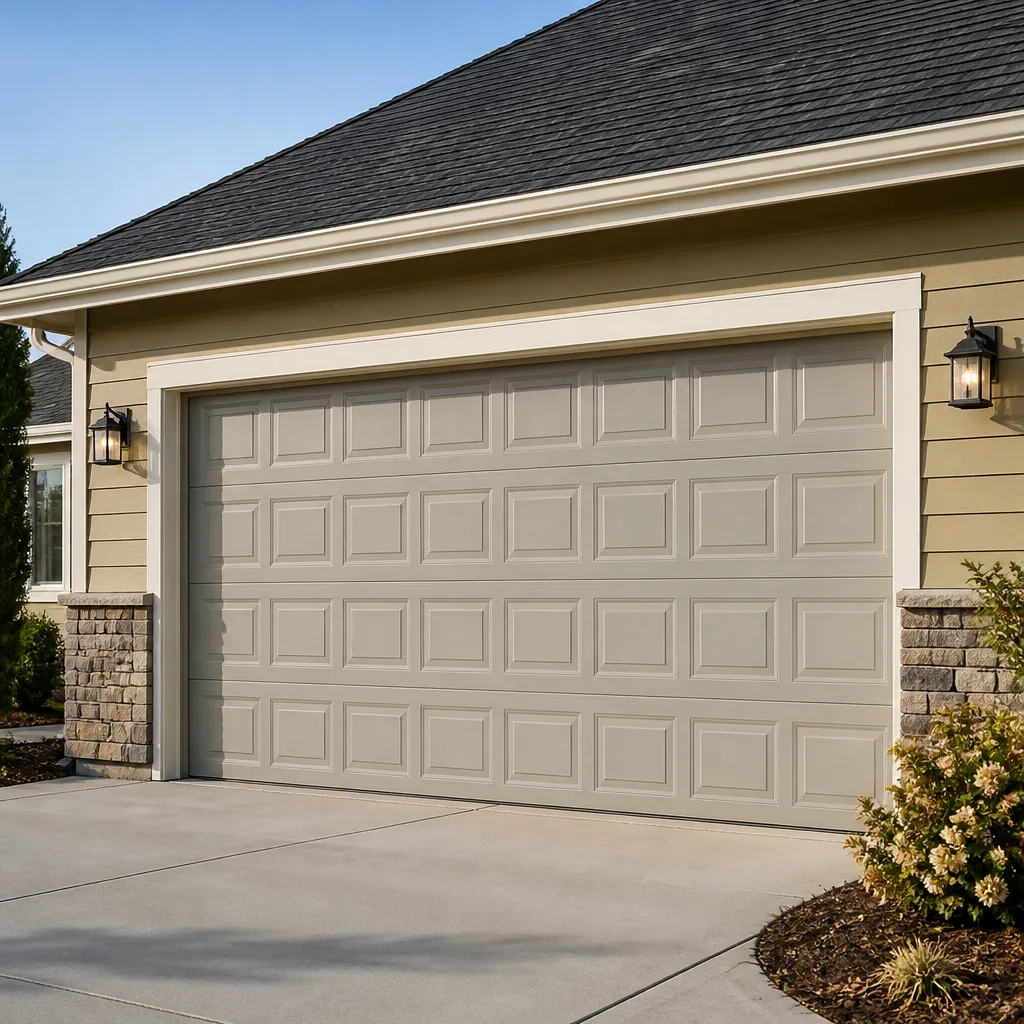 Raised-panel steel
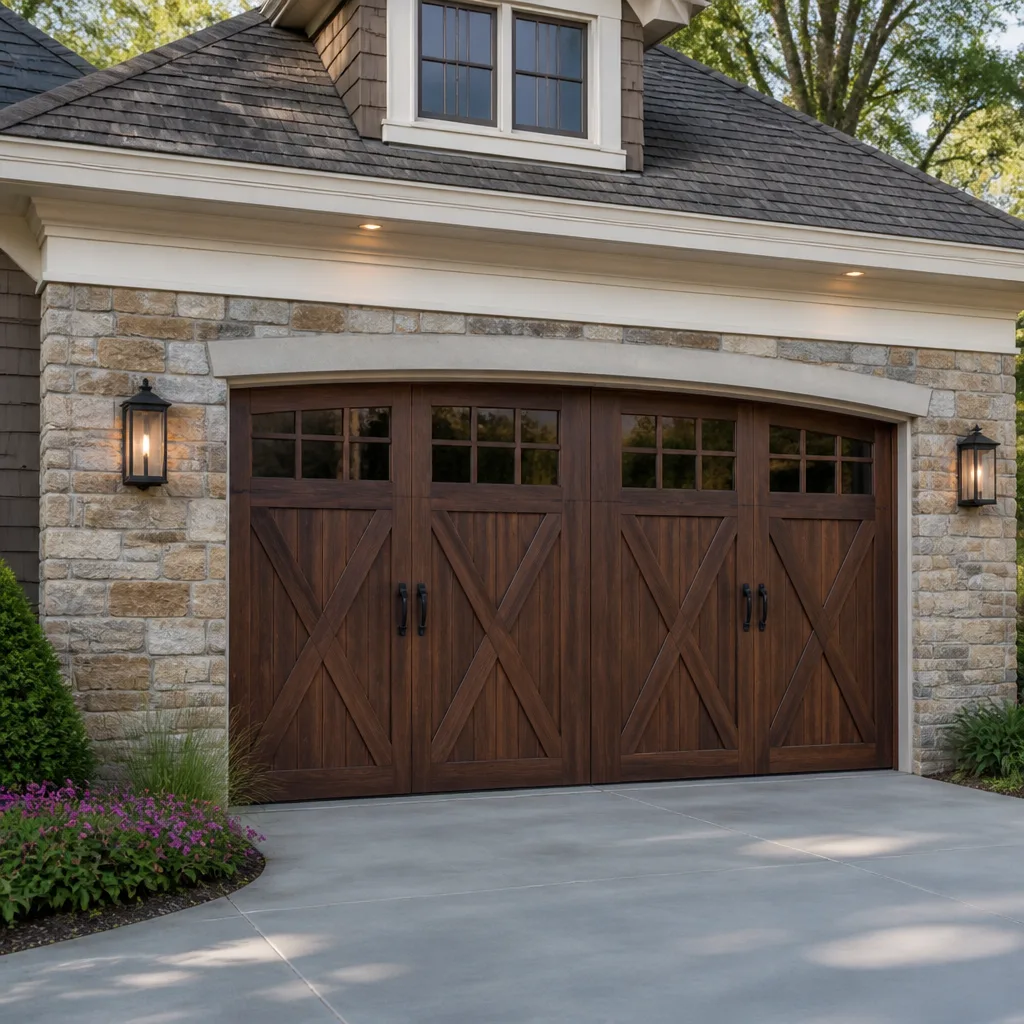 Carriage house
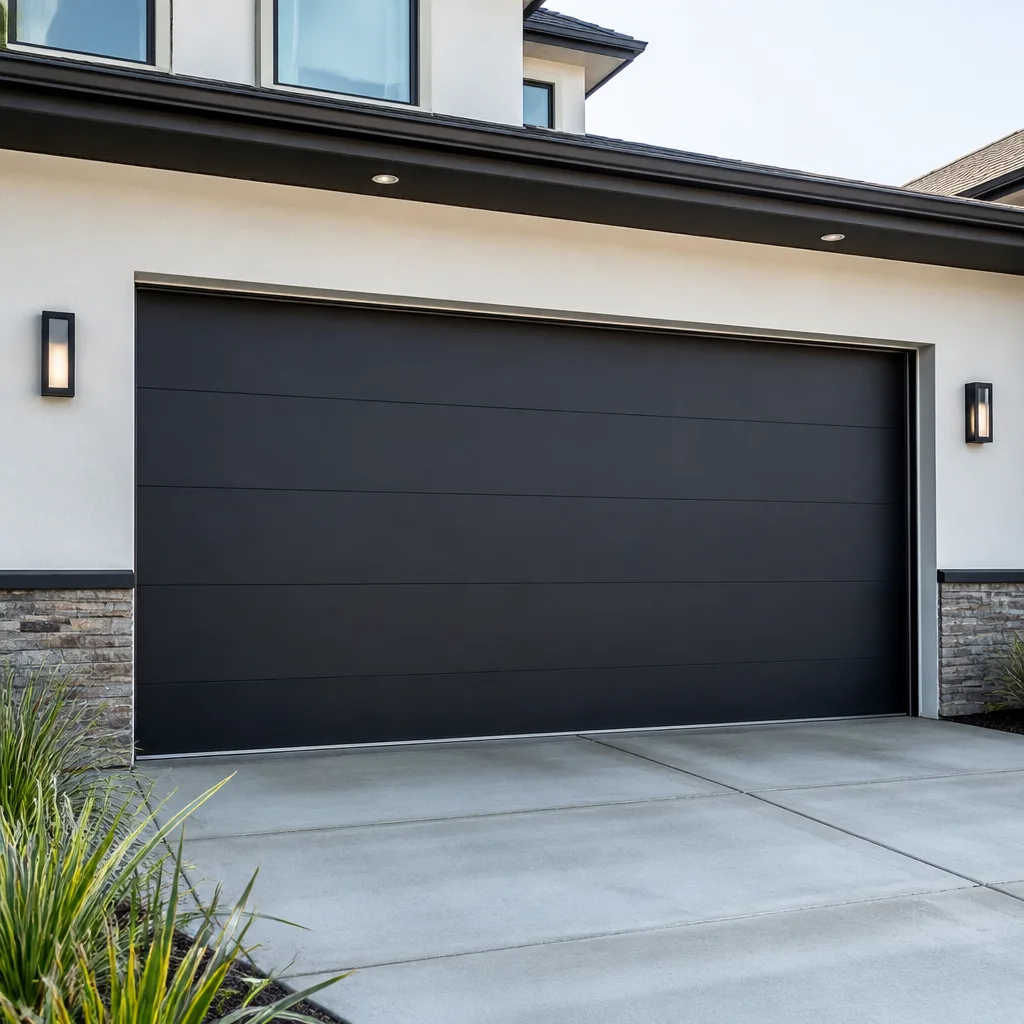 Modern flush
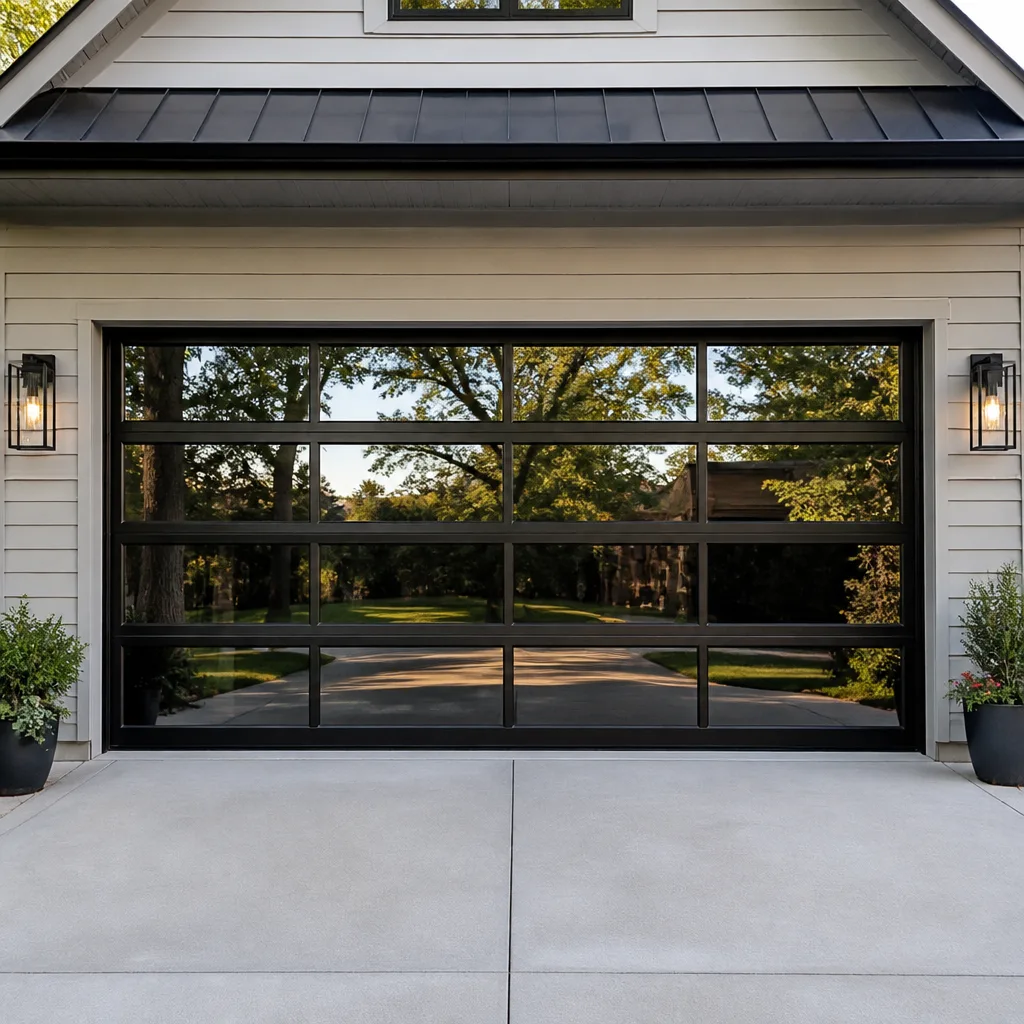 Full-view glass
 LiftMaster openers
 Chamberlain openers
Full 25-point door and opener safety check with every visit - springs, cables, rollers, tracks, and your LiftMaster or Chamberlain opener included
You get a price before we start. It does not change when the pro arrives.
Get your free estimateGarage Door Warning Signs: A Bethel Park Homeowner’s Reference Guide
A grinding noise from your opener doesn’t mean your opener is failing. Most of the time it means your spring tension is off and the opener is working harder to compensate. Replacing the opener won’t fix it, and you’ll have spent money on the wrong part. That’s the core problem with garage door symptoms: the thing you hear, see, or feel is rarely the thing that’s broken. It’s how the actual problem announces itself. In this guide, we’ll walk through the warning signs Bethel Park homeowners most often misread, connect each one to its likely mechanical source, and show you which ones need a call today and which ones can safely wait a week.
Quick Answer
Garage door warning signs in Bethel Park fall into three categories: sounds (grinding, popping, scraping), movement changes (slowing, reversing, uneven travel), and visual cues (sagging panels, loose cables, gaps at the floor). The most urgent are a snapped torsion spring, a cable off its drum, and a door that reverses before closing. The rest usually indicate wear that’s worth watching for a few days but not ignoring. Matching the symptom to the source before you call saves you from replacing the wrong component.
Styles & brands we work with
- Raised-panel steel
- Carriage house
- Modern flush
- Full-view glass
- LiftMaster openers
- Chamberlain openers
Table of Contents
- The Symptom-to-Cause Map: What Your Door Is Actually Telling You
- Which Warning Signs Are Urgent and Which Can Be Watched
- Opener Wear vs. Spring Wear vs. Track Alignment: Telling Them Apart
- Warning Signs Specific to Older Bethel Park Homes
- What “The Door Works Fine” Masks: Warning Signs With No Symptom
- Seasonal Patterns in Bethel Park: What Humidity and Freeze-Thaw Do to Your Door
- Brand-Specific Quirks: Craftsman, Raynor, LiftMaster, and Chamberlain
- A Simple Monthly Inspection Checklist for Bethel Park Homeowners
The Symptom-to-Cause Map: What Your Door Is Actually Telling You
Start with the sound. Garage doors don’t have many ways to communicate, so most of what you’ll notice is auditory. The trick is knowing which sound belongs to which part of the door.
- Grinding or whining from the opener unit itself: Usually opener gear wear or a failing drive gear, not a spring. If the opener is a chain-drive LiftMaster or Chamberlain past the ten-year mark, the gear often goes first.
- Loud bang from above, door won’t lift: Almost always a snapped torsion spring. Do not try to lift the door manually. This is the classic symptom in Bethel Park springs and we treat it as an urgent call.
- Popping or snapping during travel: Usually a torsion spring that has lost tension or a cable that’s jumped its drum. Sometimes a roller seizing in its track.
- Scraping metal on metal: Track misalignment, a bent section of track, or a roller that’s worn flat on one side.
- Rattling that increases with speed: Loose hinges, a loose bottom bracket, or a chain that’s too slack on a chain-drive opener.
- Clicking and reversing: Safety sensor obstruction, or a logic board fault on a Craftsman or Genie unit.
- Silent but slow: Spring tension loss or a failing opener capacitor. The door moves but feels heavy.
Write down what you hear, when you hear it, and whether it happens on the way up, the way down, or both. That single note will save a diagnostic trip when you call for garage door repair.
Which Warning Signs Are Urgent and Which Can Be Watched
Not every symptom is an emergency. Some are the door asking for a service visit this week. Others are the door telling you not to run it again. Getting that distinction right is the difference between a routine repair and a dangerous situation.
Call today
- Loud bang followed by a door that won’t open. A broken spring means the opener is fighting the full weight of the door. Running it can strip the opener gear and damage the door.
- Cable hanging loose or off the drum. Cables are under extreme tension. A slack cable is a hazard to anyone standing near the door.
- Door reverses before it reaches the floor. That’s the safety reverse working, which means something is blocking or the sensor alignment is off. Don’t force it closed.
- Visible sag or bend in a panel. A compromised panel can fail suddenly, especially in cold weather.
- Door off its track or tilted on one side. Stop operating it. This is a structural problem, not a lubrication problem.
Watch for a few days
- A door that’s slightly slower than it used to be. Note the date and see if it gets worse.
- Occasional squeaking that lubrication quiets temporarily.
- A small gap at one corner of the floor seal. Worth checking but not urgent.
- One sensor that occasionally misses. Try cleaning the lens first.
If a “watch” item becomes a “call today” item over those few days, stop running the door and pick up the phone. Call (877) 792-7284 and we’ll talk through it. Estimates are free.
Opener Wear vs. Spring Wear vs. Track Alignment: Telling Them Apart
This is where most homeowners go wrong. Three different problems can feel like the same problem, and each fix is a different visit. The good news is that a few checks narrow it down quickly.
Test 1: The manual release
Pull the emergency release cord (with the door closed and the opener disengaged). Now lift the door by hand to about waist height. A healthy door will hold there on its springs. If it drops back down, your spring tension is off. If it feels extremely heavy, spring tension is low or broken. If it feels smooth and stays put, the springs are fine and your problem is elsewhere.
Test 2: Listen to where the noise originates
Stand under the opener and listen. If the grinding comes from the ceiling-mounted unit, it’s the opener. If it comes from the spring bar above the door, it’s spring or bearing related. If it comes from the track at the sides, it’s rollers or alignment.
Test 3: The balance check
With the door released from the opener, lift it to halfway and let go. A balanced door stays. A door that drifts down on one side has a spring or cable out of adjustment on that side. That asymmetry is often the real cause of what feels like a “slow opener.”
Being brand-familiar matters here. We work on the brand already in your garage, whether that’s a Craftsman chain-drive from the 2000s, a Raynor torsion setup, or a newer LiftMaster. Knowing how a specific unit sounds when it’s healthy versus when it’s straining is half the diagnosis. When the answer points to the motor unit rather than the springs, that’s a separate visit, and garage door opener repair is a different job than spring work.
Warning Signs Specific to Older Bethel Park Homes
Bethel Park has a mix of mid-century homes and newer construction, and the older ones share garage door issues that newer homes don’t. Bethel Park homes from the 1950s through the 1970s often have garages whose framing wasn’t built to modern tolerances. That matters because garage doors are unforgiving of small misalignments.
Settlement gaps at the floor
As foundation and slab settle over decades, the garage floor and the door header can shift out of parallel. You might notice a gap at one corner that wasn’t there years ago, or daylight under the door on one side. That’s not a door problem, it’s a frame and building-settlement issue. A door that’s perfectly fine can look “broken” because the frame around it has moved.
Out-of-square frames
Garage door openings in older homes are often slightly out of square. A door measured for a square opening will bind against one jamb. Warning signs: scraping at the sides, one side lagging behind the other during travel, and tracks that look subtly uneven when you sight them from the floor up.
Humidity damage
Western Pennsylvania summers bring weeks of high humidity. Wood jambs swell, painted steel panels hold moisture at the bottom, and rollers bind. This shows up as scraping that comes and goes with the weather. If your door sticks in July and runs fine in October, humidity is the culprit, not the door.
Old hardware at the end of its life
Older Bethel Park homes frequently still run on original hinges, brackets, and rollers. These wear out quietly and then fail without warning. We’ve seen brackets that look fine until they don’t. If you’re unsure of the age of any of the hardware on your door, it’s worth asking a technician to take a look before something bigger goes wrong.
What “The Door Works Fine” Masks: Warning Signs With No Symptom
Plenty of failing garage doors give no warning at all. The door opens, it closes, and then one day it doesn’t. That’s not bad luck. It’s cumulative wear that was invisible until the moment of failure. Here’s what to look for even when the door seems fine.
- Hairline cracks on torsion springs. Springs fatigue over thousands of cycles. A small crack near the coil is the beginning of a snap. You won’t hear anything until it goes.
- Cable fraying near the drum. A single broken strand is the start of a cable failure. Almost never visible unless you look up close.
- Roller flat spots. Rollers go from round to flat-sided silently. The door will eventually start to rumble, but by then the rollers have been failing for a while.
- Loose lag bolts in the header. The bolts holding the torsion bar to the garage header can loosen over the years. The door runs fine until the bracket starts to pull free.
- Photo-eye lag. Safety sensors on older units can respond a fraction of a second slower than they should. You won’t notice until a child runs under the door.
- Weather seal rot. The bottom seal crumbles from the inside. Water and pests get in long before you notice the seal is gone.
If any of these give you pause, schedule a look. A trained eye catches in five minutes what took years to develop. We can also tell you whether what we find is a spring issue or a broader tune-up need, so the estimate reflects reality. If it’s springs, we’ll walk you through garage door spring repair specifically, since the fix is different from a general service call.
Seasonal Patterns in Bethel Park: What Humidity and Freeze-Thaw Do to Your Door
Bethel Park sits in a climate with two distinct garage door seasons, and each one stresses the door in a different way. Knowing the pattern tells you what to expect in a given month.
Freeze and thaw (late fall through the end of winter)
- Wood swelling at the bottom of the frame. Moisture from melting snow and ice gets into the jamb and swells it. The door starts to scrape on cold mornings.
- Stiff springs. Cold makes metal stiffer. A spring that’s marginal in October can snap in January. That’s the most common month for spring failures in this area.
- Frozen floor seals. The bottom seal can freeze to the concrete. When the door opens, it tears. If you notice the seal sticking, don’t force it.
- Contraction gaps. Metal doors and tracks contract in the cold, sometimes enough to loosen hardware.
Humidity (June through September)
- Binding rollers. High humidity accelerates rust on steel rollers, especially in unconditioned garages.
- Lubrication wash-out. Grease on the screw-drive openers can thin out in the heat. Listen for a whine that wasn’t there in April.
- Panel warp. Wood and some composite doors absorb moisture unevenly and bow slightly. The bow isn’t visible until the door starts to bind.
If you want to be proactive, ask for a service visit in early fall. That’s the best window to catch the weakness before the cold months turn it into a broken spring at the worst possible time. If a door fails in the middle of a cold snap, we do offer emergency service and can often get to it the same day. For an unexpected failure outside regular hours, call (877) 792-7284 and we’ll book the earliest slot available, including early mornings or Sundays.
Brand-Specific Quirks: Craftsman, Raynor, LiftMaster, and Chamberlain
Different brands fail in different ways, and knowing the brand helps narrow the diagnosis. We work on Craftsman, Raynor, LiftMaster, Chamberlain, Genie, Clopay, Amarr, and Wayne Dalton. The pattern notes below are general, not absolute, but they’re the ones we see most often.
- Craftsman openers: Tends to be the drive gear in older chain-drive units. When a Craftsman starts grinding, the opener is usually the source, and the door above it is fine. If your Craftsman is paired with torsion springs, though, rule out the springs first before condemning the opener.
- LiftMaster and Chamberlain: Modern units with logic boards that sometimes fail in ways that look like a dead opener. If the wall button doesn’t work and the remotes don’t either, it’s electrical, not mechanical. If the remotes work but the wall button doesn’t, it’s the wall button or the wiring.
- Raynor doors: Often paired with heavy torsion springs and robust hardware. When a Raynor door starts to sag, it’s usually the springs losing tension rather than the door panels giving out. The door is heavy enough that spring failure is noticeable immediately.
- Clopay and Amarr doors: Panel and hinge wear tends to be the first thing to show, especially on double-wide doors. Listen for hinge rattle at the ends of travel.
- Wayne Dalton doors: Usually the roller assemblies and safety sensors. The sensors on some older Wayne Dalton units can develop a slight lag, worth checking on doors that seem to reverse randomly.
Knowing the brand reduces the guesswork and shortens the visit. It’s the reason we work on the brand already in your garage rather than steering you toward a replacement you don’t need.
A Simple Monthly Inspection Checklist for Bethel Park Homeowners
Ten minutes once a month catches most of the failures we see in Bethel Park before they become emergencies. Print this, or save it on your phone, and run through it as a habit.
- Listen on the way up and the way down. Note any change in sound from last month. Any new grinding, popping, or scraping is a flag.
- Watch the door travel. Does it move smoothly side-to-side, or does one side lag? Binding is one of the earliest warning signs of an alignment or spring problem.
- Check the balance. With the door closed, pull the manual release cord and lift the door to waist height. It should hold on its own. If it drops, the springs are losing tension.
- Look up at the springs. Do not touch. Just look for visible gaps or cracks in the coils. Also look at the cables for frays near the drums.
- Inspect the bottom seal. Is it intact, or is it crumbling, torn, or separated from the door? A worn seal lets water in and, in cold weather, will freeze and tear more.
- Test the safety reverse. Place a small piece of wood or a thick book under the door and close it. The door should reverse on contact. If it doesn’t, the safety system is failing.
- Check the photo-eyes. Wipe the lenses and confirm the LED on both units is on and steady (not flickering).
- Sight the tracks. Stand back from the door and look up each side. The tracks should look straight and parallel. Any bend, kink, or dents mean a technician should take a look.
- Look for water at the floor. Standing water or staining at the bottom of the door in spring thaw or after heavy rain suggests the seal or the frame has shifted.
- Tighten nothing yourself. If you find a loose bolt, note it. Don’t try to tighten bolts along the torsion bar or cables. These systems are under load and a mistake is serious.
If anything on the checklist turns up, note it and call. A quick conversation will tell you whether it’s a this-week visit or a this-month visit. Call (877) 792-7284, and we’ll help you sort it. Estimates are free.
Common Mistakes to Avoid
- Replacing the opener before checking the springs. The most expensive mistake on this list. The opener grinds because it’s fighting low spring tension. Swap the opener and the grinding continues. Check the balance first.
- Ignoring a small gap at the floor. A gap that wasn’t there last year usually means the frame has settled or the bottom seal has failed. Left alone, water gets in, wood swells, and a small repair becomes a frame fix.
- Lubricating the tracks. Track lubrication is a common piece of bad advice. It attracts grit, which accelerates roller wear. Grease goes on the hinges and rollers, not the tracks.
- Trying to adjust torsion springs at home. This is the mistake that sends people to the hospital. Torsion springs hold hundreds of pounds of force. There’s no safe home fix, no matter what a video claims.
- Assuming the door is fine because it opens. Everything on the “silent signs” list is invisible from the front seat of your car. The door being openable and the door being safe are different things.
- Calling a general handyman for a garage door problem. Garage doors are a single trade for a reason. A specialist knows brands, spring tension, opener logic boards, and track geometry. A generalist guesses. The guessing bill is usually higher than the specialist’s.
- Buying a new opener because the remote stopped working. Usually the remote battery, the wall button, or the sensor alignment. A five-minute check before you order a new unit saves you hundreds.
See the difference
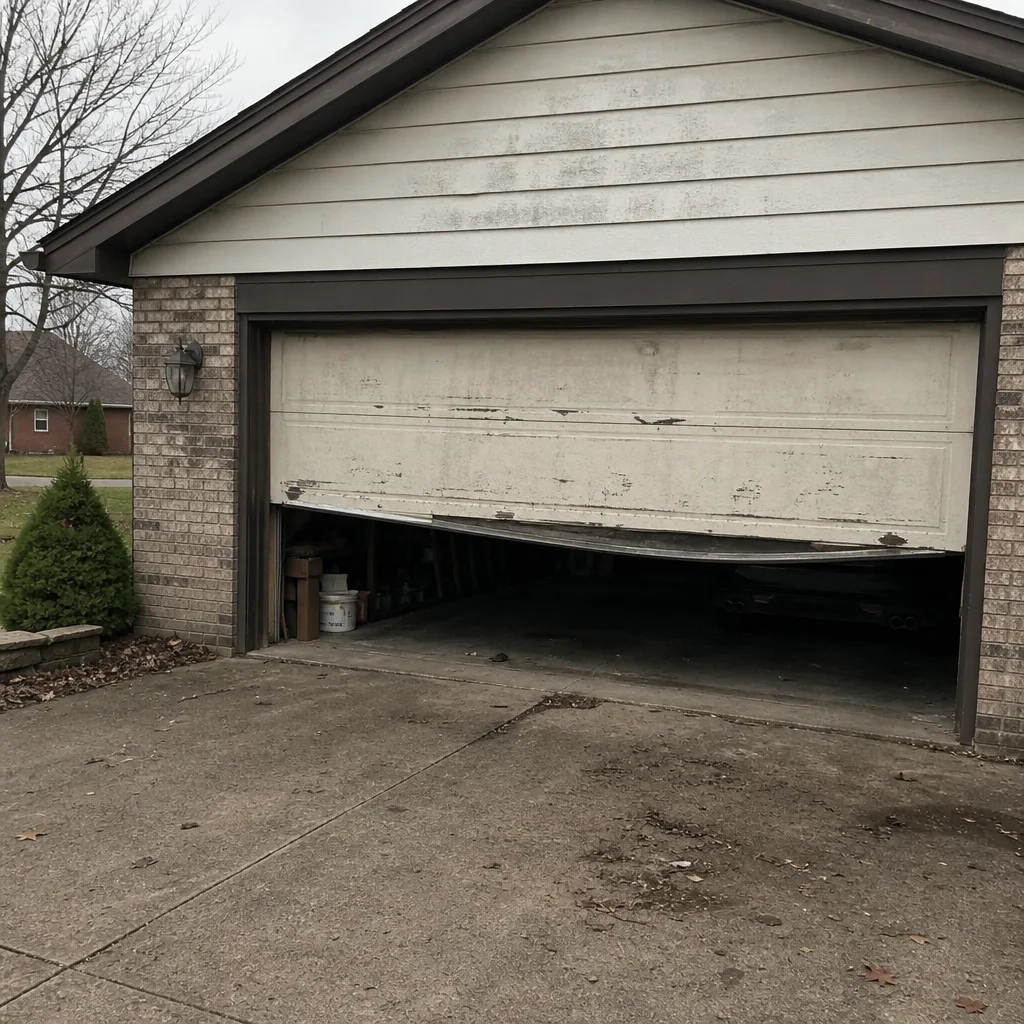 Before
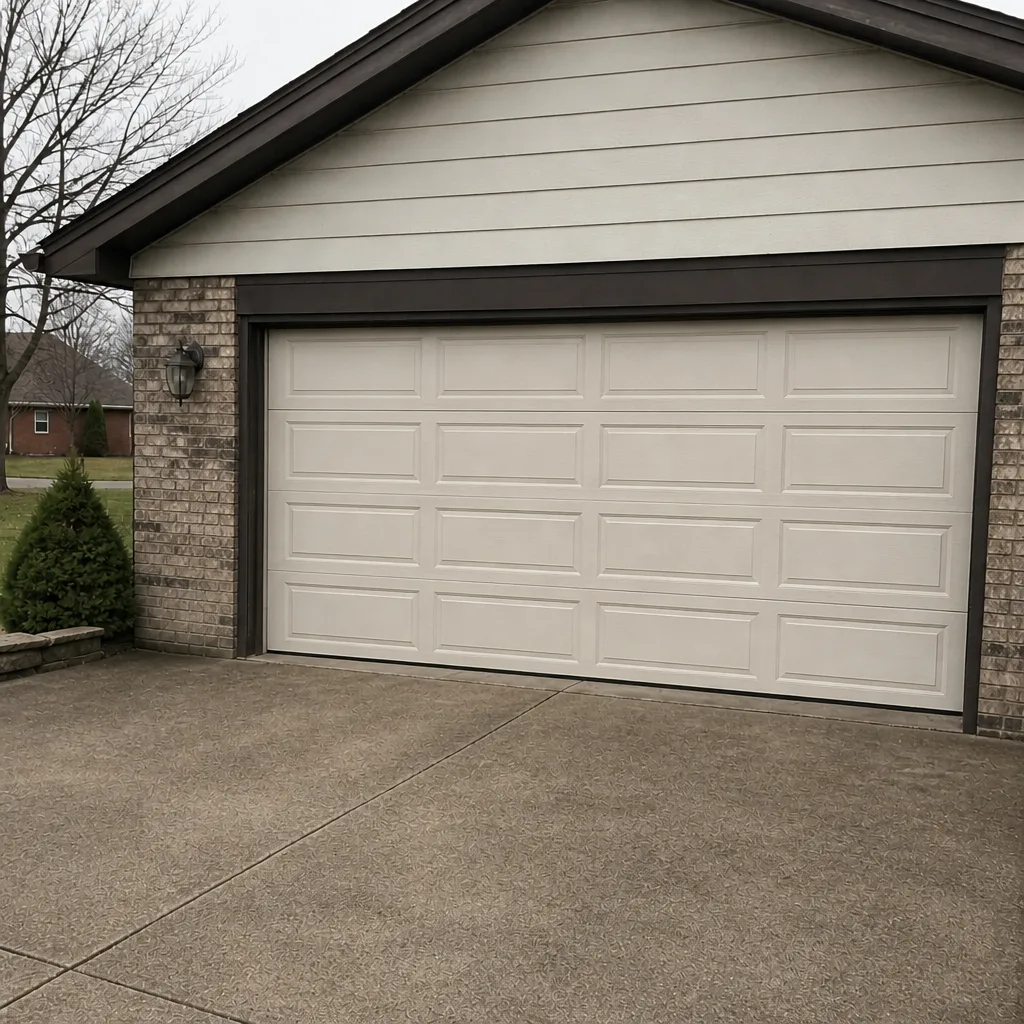 After
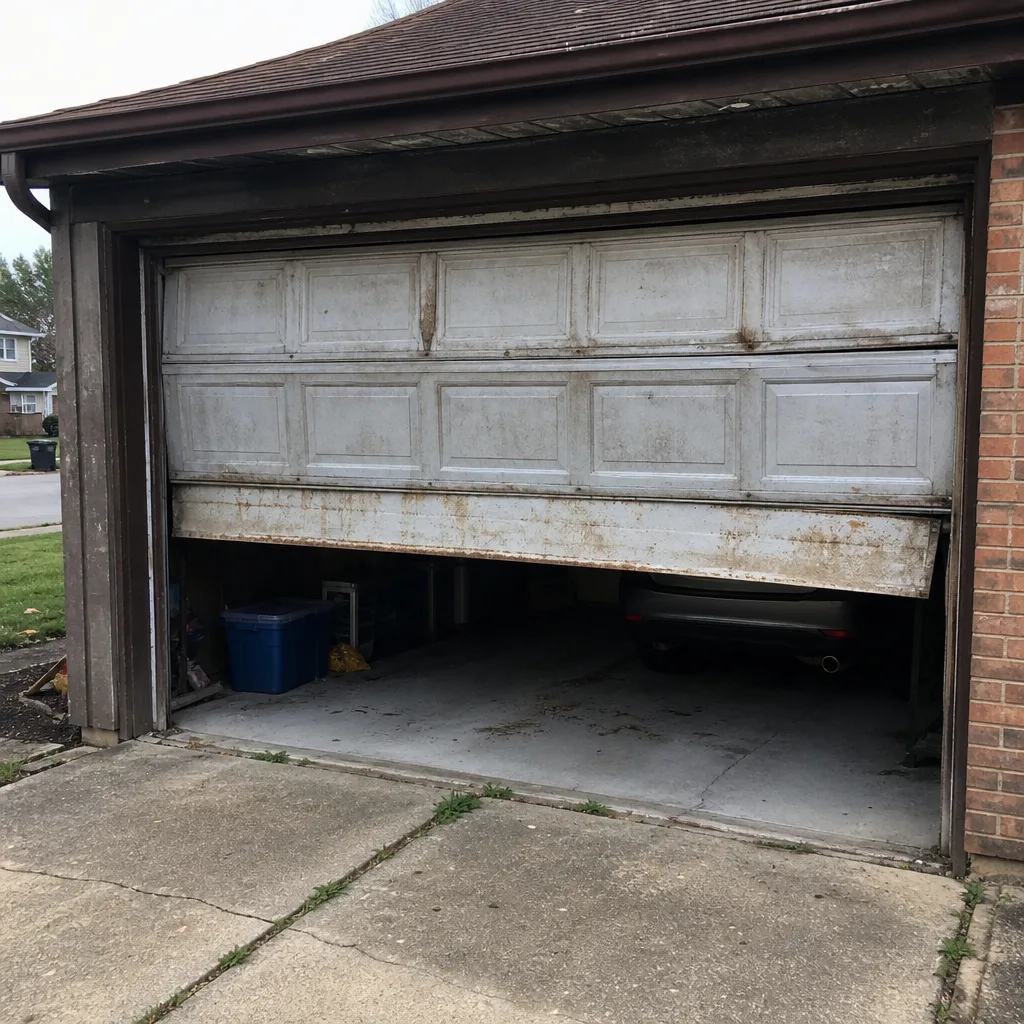 Before
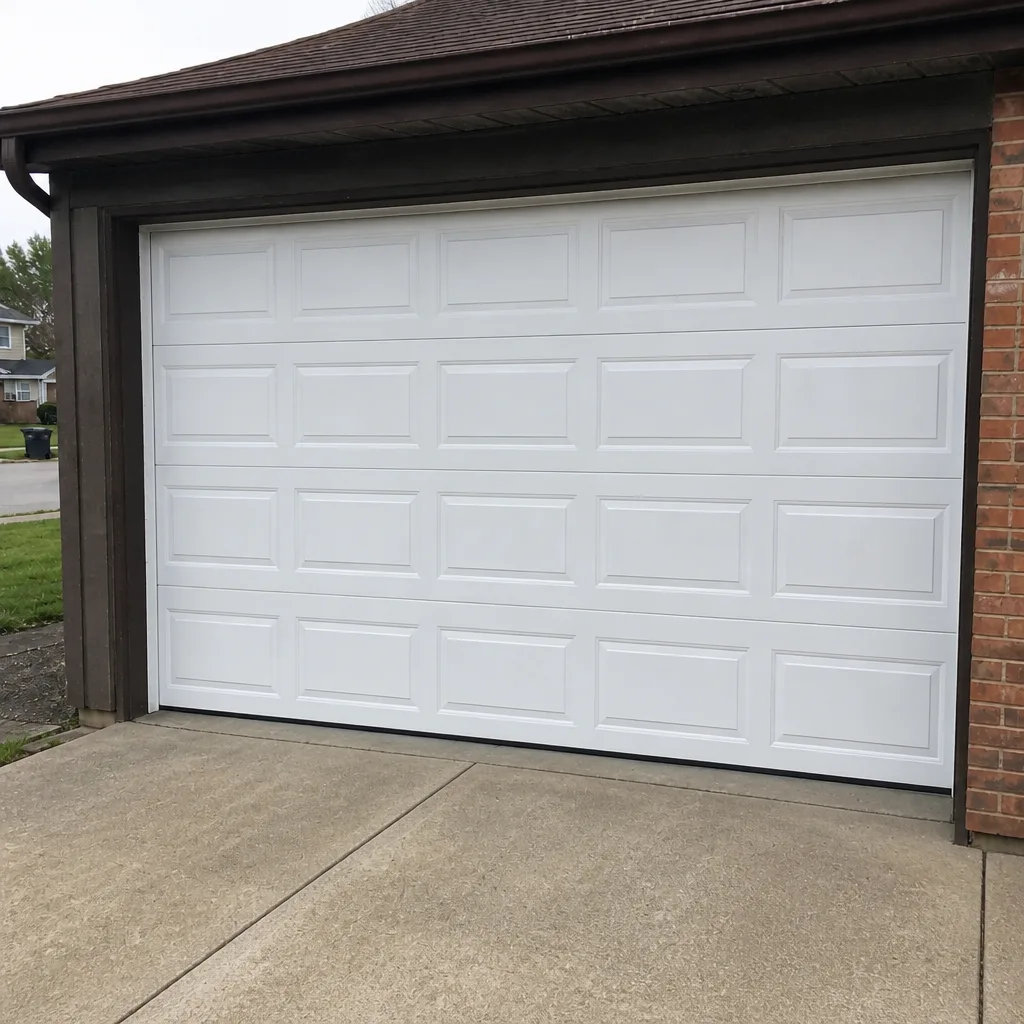 After
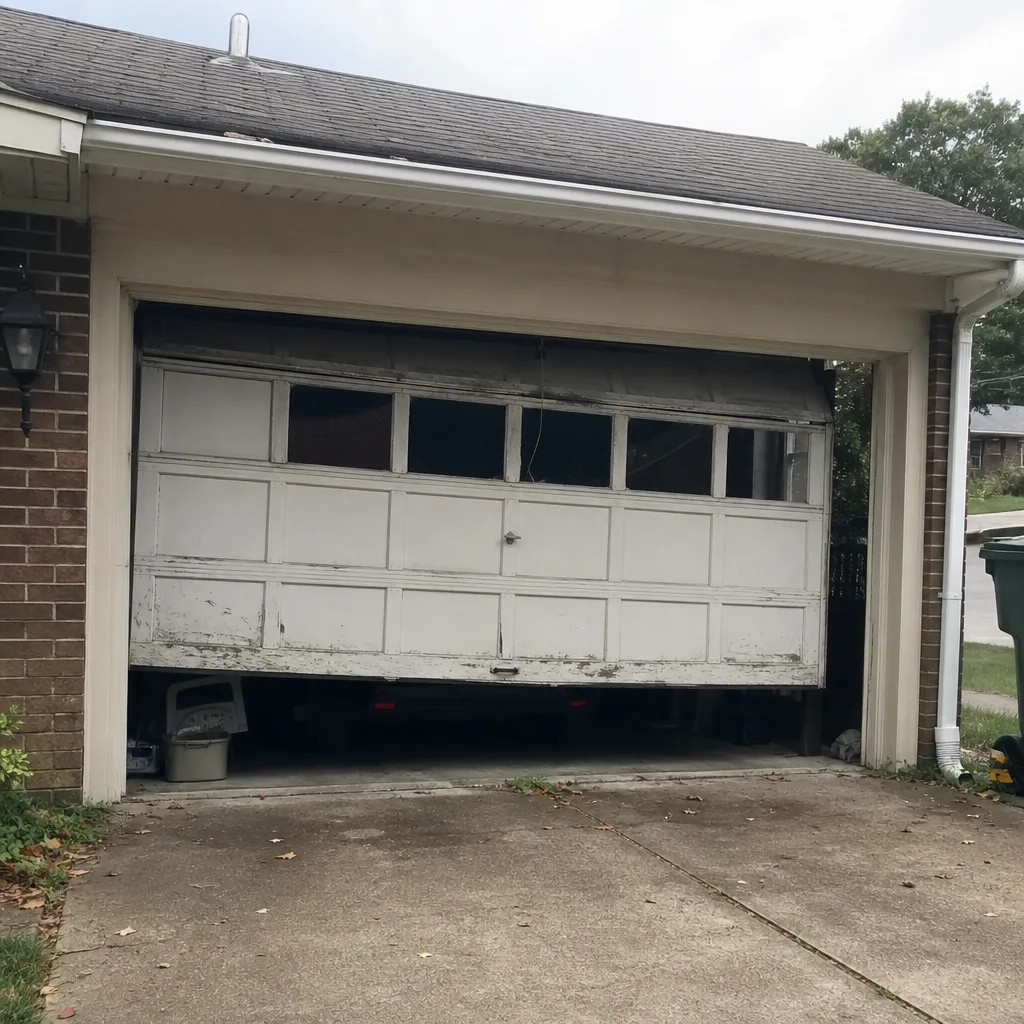 Before
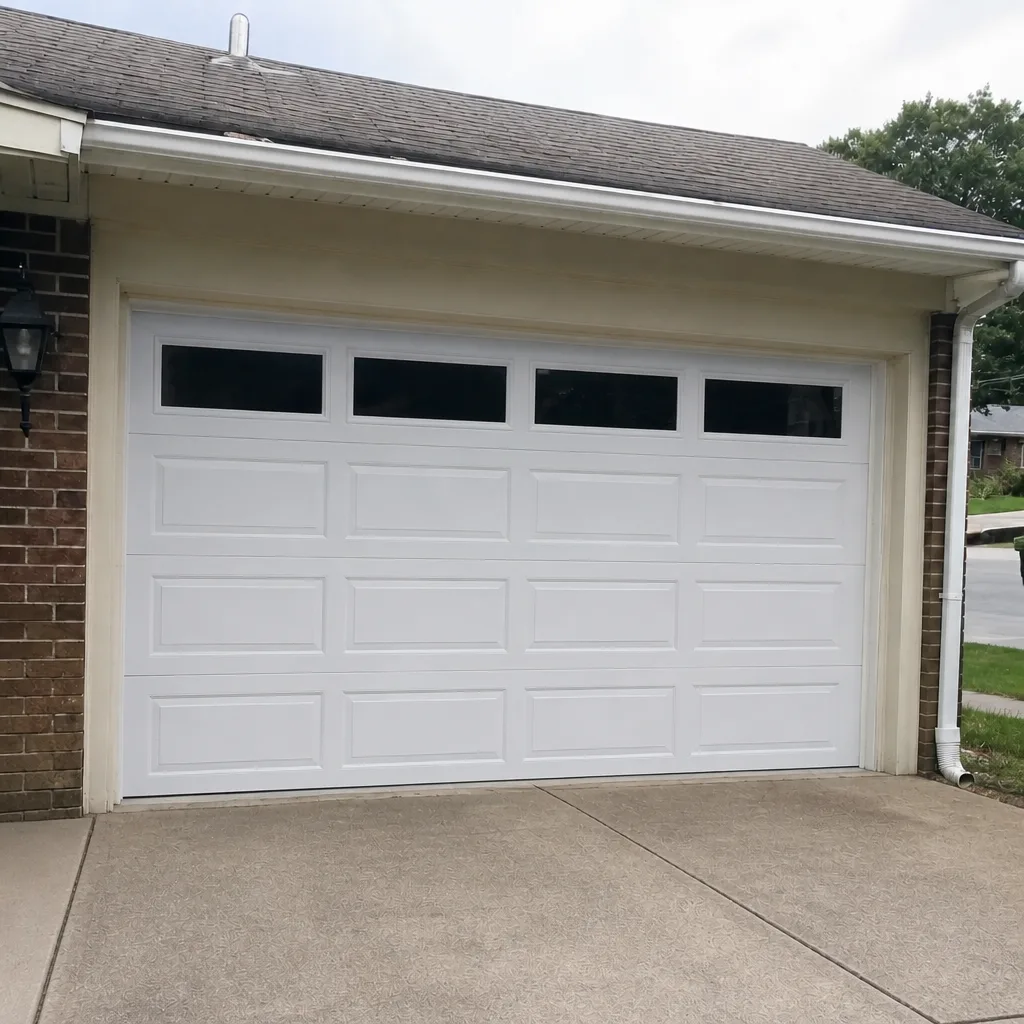 After
When to Call a Professional
Call a professional if you hear a loud bang and the door won’t open (likely a broken spring), if a cable is hanging loose, if the door reverses before reaching the floor, if a panel is visibly sagging, or if the door is off its track. Also call if a “minor” issue has been getting worse for a few weeks. Sitting on a symptom like a slow rise or an occasional scraping tends to turn a fixable repair into a bigger one. Spring work especially should never be a homeowner job. And if the door is on a Craftsman, Raynor, LiftMaster, or Chamberlain unit and you’re not sure what’s failing, an experienced eye separates the motor issue from the spring issue in one visit. Garage Door Repair Bethel Park offers free estimates in Bethel Park. Call (877) 792-7284. Our technicians have up to 9 years of experience.
Frequently Asked Questions
The most common in Bethel Park are a door that gets slower and louder over a few weeks, grinding from the opener, a scraping sound at the sides of the door, and a door that reverses before reaching the floor. A snapped torsion spring, usually announced by a loud bang, is the most common urgent failure in this area. Each of these points to a different component, which is why matching the symptom to the source matters before booking a repair. Call (877) 792-7284 for a free estimate.
Pull the manual release cord and lift the door by hand to waist height. If it stays up, the springs are fine and the opener is the likely culprit. If it drops or feels extremely heavy, the springs are the source. That five-second test separates the two most common causes of grinding and slowness before you call. Call (877) 792-7284 and we can walk you through what you found.
Spring repair in Bethel Park typically runs $180 to $340 per spring for a single torsion or extension spring. Most doors use a matched pair, so expect about twice that for both, in the $360 to $680 range. The written estimate we provide sets the final price, and we quote before any work starts. Call (877) 792-7284, and estimates are free.
No. We quote the work before we start, and that quoted price is the price for the job we agreed to. If our technician finds something the quote didn’t cover, you’ll hear about it before any extra work begins. You decide whether to proceed. Call (877) 792-7284 for a free estimate.
Yes. Plenty of failing doors show no outward symptom. Hairline cracks on torsion springs, early cable fraying, and worn rollers are invisible from the front seat of your car but reliably precede a failure. A visual inspection once a month catches most of these. If you’re not sure what you’re seeing, a technician can look and tell you. Call (877) 792-7284 for a free estimate.
Yes. Homes in Bethel Park from the 1950s through the 1970s often have out-of-square garage frames and settling foundations, which makes doors bind and scrape even when the door itself is fine. Humidity in the summers adds swelling and rust on older hardware. If your door sticks at certain times of year and runs fine at others, the building is often the source rather than the door. Call (877) 792-7284, and we can schedule a look.
The Bottom Line
The warning signs your garage door gives you are a language, not a verdict. Grinding isn’t always the opener. Sluggishness isn’t always wear. A scraping noise is often the house, not the door. The point of this guide is to save you from replacing the wrong component, and to help you tell the difference between a this-week call and a this-month call. If you remember one thing, remember the manual release test: pull the cord, lift the door, and see whether the springs hold it. That single check answers most of the questions in this Bethel Park guide. For everything else, call us at (877) 792-7284 for a free estimate. We work on the brand already in your garage, and we know how it should sound.
Written by the team at Garage Door Repair Bethel Park.